Earth Care
Protect and regenerate the living soil, water systems, forests and biodiversity. Every design decision begins with asking: does this heal the earth?
 Universal Farm
“Design with nature, not against it.”
Regenerative ecosystems•Kindness-based exchange•Natural living•Community resilience
Rooted in nature. Built for humanity.
Permaculture is a design science for creating regenerative human settlements that work in harmony with natural ecosystems. It weaves together traditional wisdom, ecological observation and practical innovation.
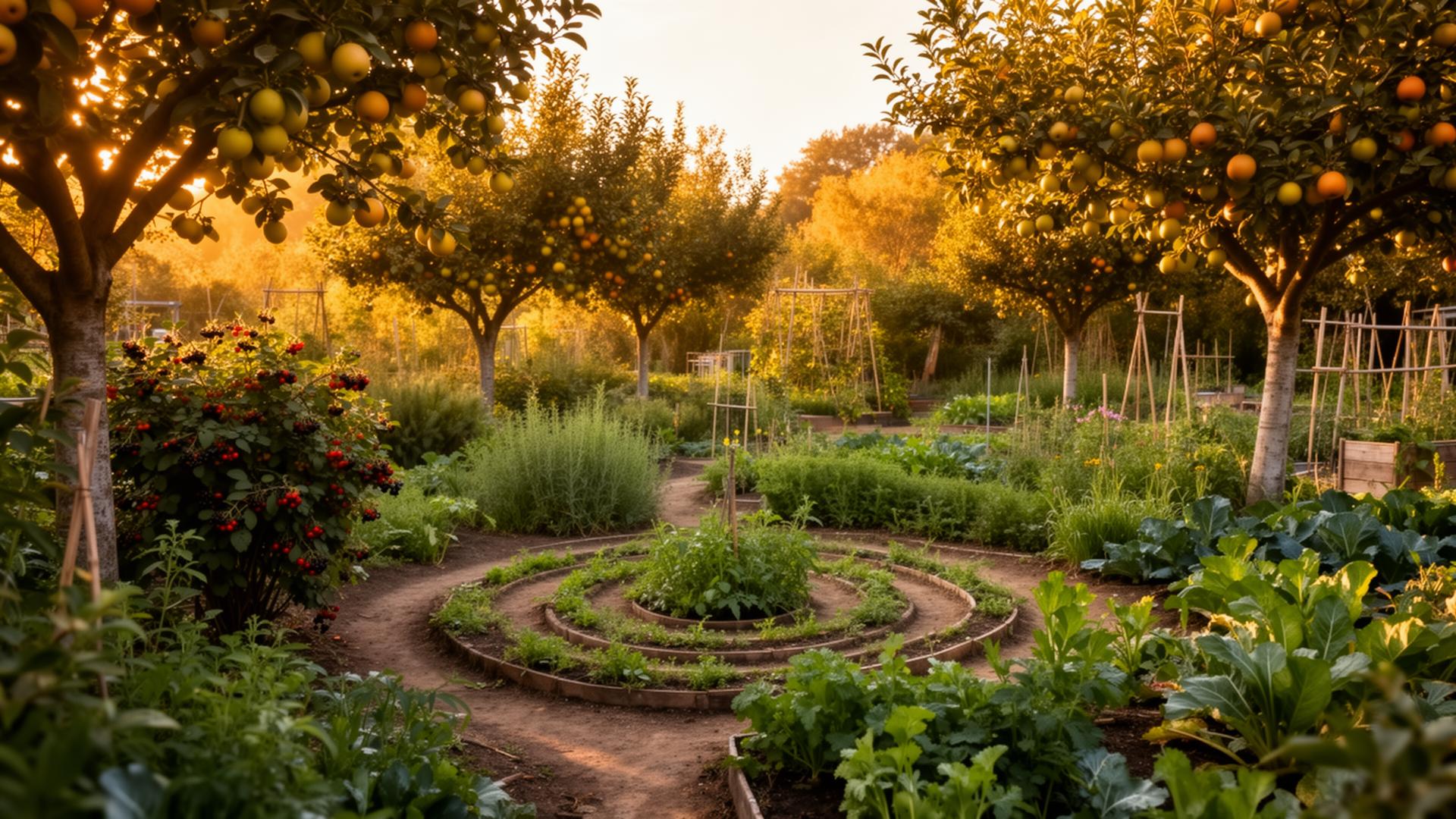
“Permaculture is the conscious design and maintenance of agriculturally productive ecosystems which have the diversity, stability, and resilience of natural ecosystems."
— Bill Mollison
Protect and regenerate the living soil, water systems, forests and biodiversity. Every design decision begins with asking: does this heal the earth?
Support human wellbeing through access to clean food, water, shelter and community. Permaculture is not just about plants — it is about people thriving within natural systems.
Set limits to consumption and redistribute surplus. Take only what you need, reinvest abundance back into the system, and ensure resources flow to those who steward them.
Study your land, climate, water flow and wildlife patterns before planting a single seed. Nature reveals its design if you pay attention.
Harvest rainwater, sunlight, biomass and fertility when they are abundant so the system thrives in lean times.
Every element must produce something useful — food, fibre, medicine, habitat or beauty. No energy is wasted.
Accept feedback, correct excess, and design systems that naturally limit their own growth to healthy boundaries.
Let wind, sun, gravity and biological cycles do the heavy lifting. Minimise dependence on fossil inputs.
The waste of one element becomes the food of another. Compost, mulch, greywater loops and nutrient cycling close every loop.
Begin with the broad landscape — zones, sectors, water flow — then refine down to individual plant placement.
Place elements in relationships where they support each other. Polycultures outperform monocultures at every scale.
Small-scale, locally adapted systems are more resilient, easier to manage and far more efficient than industrial alternatives.
Genetic diversity, species diversity and functional diversity create stability, resilience and abundance.
The edge between forest and field, pond and land, is where the most life and productivity exists. Design edges into your system.
Disturbance is inevitable. Design systems that not only survive change but use it as an opportunity to regenerate and evolve.
Permaculture zones organise the landscape by frequency of human use and management intensity. The house is Zone 0. The wilderness is Zone 5. Each zone informs what you plant, how you maintain it, and how energy flows through the system.
The centre of human activity. Indoor plants, herbs on the windowsill, compost buckets under the sink, rainwater tanks on the roof.
High-maintenance annuals, herbs and daily-use plants right outside the door. Intensive care, intensive harvest.
Fruit trees, berry bushes, nut groves, poultry runs and beehives. Visited regularly but not daily.
Main staple crops, grain fields, large vegetable plots, grazing animals and bulk composting systems. Seasonal attention.
Semi-managed woodland, foraging zones, timber coppice, wildlife corridors and wildcrafting areas. Minimal intervention.
Untouched nature reserve. Observation, learning, inspiration and habitat for the predators, pollinators and seed dispersers your farm depends on.
A layered, self-sustaining forest garden that mimics natural woodland. Canopy trees, understory fruit, shrubs, herbs, ground covers, root crops and climbers all stacked vertically in time and space — producing food, medicine and habitat with minimal maintenance after establishment.
On-contour ditches and berms that slow, spread and sink rainwater into the landscape rather than letting it run off. Swales transform arid land into hydrated, productive ecosystems by recharging groundwater and creating microclimates.
Raised garden beds built over buried logs, branches and woody debris. As the wood decomposes it releases nutrients, retains moisture like a sponge, and creates warmth — extending the growing season and reducing irrigation needs by up to 70%.
A landscape-scale water and contour management system developed by P.A. Yeomans. Keyline ploughing follows the natural shape of valleys to distribute water evenly across land, turning drought-prone slopes into green, productive pasture.
Strategic plant communities where each species performs a function — nitrogen fixation, pest repellence, pollination attraction, ground shading or nutrient accumulation. A classic three sisters guild combines corn, beans and squash for mutual support.
Hot composting, vermicomposting, sheet mulching and chop-and-drop nutrient cycling all return organic matter to the soil. Living soil is the foundation of every permaculture system — feed the soil and the soil feeds everything else.
Preserving open-pollinated, heirloom and indigenous varieties ensures genetic diversity, seed sovereignty and local adaptation. Saved seeds evolve with your specific microclimate, becoming more resilient and productive with each generation.
Rooftop rainwater collection, greywater diversion from sinks and showers, infiltration basins and constructed wetlands all reduce freshwater demand while returning nutrients to the landscape. Water is life — design every drop to be used at least twice.
Every plant has a job. Together they create a self-sustaining community that produces food, builds soil, repels pests and welcomes pollinators.
| Layer | Plant | Role |
|---|---|---|
| Canopy | Apple or Plum Tree | Primary yield, shade, deep roots |
| Understory | Currant or Elderberry | Secondary fruit, bird habitat |
| Shrub | Siberian Pea Shrub | Nitrogen fixation, windbreak |
| Herb | Comfrey & Yarrow | Nutrient accumulation, pest deterrence |
| Ground Cover | Clover & Strawberries | Nitrogen, living mulch, berry yield |
| Root | Daikon Radish & Garlic | Soil aeration, biofumigation, food |
| Climber | Grape or Hardy Kiwi | Vertical yield, shelter for trunk |
At Universal Farm, permaculture is not practiced in isolation. It braids naturally with Vedic lunar sowing calendars, yogic intention-setting at planting, and electroculture antennas placed along swale berms. The result is a design system that is ecological, spiritual and experimentally curious — all at once.
Panchatatva mapping overlays permaculture zones with elemental balance. Desi cow preparations feed compost and vermicompost systems.
Meditation and sankalp before earthworks. Sound frequencies in food forests to harmonise plant vibration and farmer consciousness.
Copper spirals installed along swale contours to amplify atmospheric charge in moist microclimates created by earthworks.
Join our community of permaculture designers, share your site observations, request a design review, or list your surplus seedlings and seeds on the marketplace.